
Luxury travel guide
Malaga Travel Guide 2026
Málaga travel guide 2026: explore beaches, Old Town, Alcazaba, Picasso Museum, food, hotels and top tips for a sunny Costa del Sol city break.
Málaga is one of those cities that makes travel feel easy.
It has the sea. It has the light. It has narrow streets, warm evenings, long lunches, open plazas and the kind of Mediterranean rhythm that makes you slow down without planning to. It is a beach city, but not only a beach city. It is a cultural city, but never heavy. It is historic, but still young in energy.
For 2026, Málaga stands out as one of Europe’s most rewarding seaside city breaks. It works for a long weekend, a full week, a family holiday, a food-focused trip or a relaxed escape with a little bit of everything. The city sits on Spain’s Costa del Sol, with beaches close to the centre, museums within walking distance, excellent restaurants, rooftop bars, markets, shopping streets and easy day trips into Andalusia.
This is a destination where you can start the morning with coffee in the old town, visit a fortress before lunch, swim in the afternoon, eat grilled sardines by the sea and end the day with a drink overlooking the port.
Málaga feels simple. That is part of its charm.
Why visit Málaga in 2026
Málaga has become one of Spain’s most attractive city-and-sea destinations. It is more relaxed than Barcelona, more compact than Valencia and more urban than many traditional beach resorts on the Costa del Sol.
The city is easy to understand. The historic centre is walkable. The beach is close. The airport is well connected. The food scene is strong. The weather is one of the main reasons people return.
In 2026, Málaga is also a particularly interesting choice for travellers who want more than sun. The city continues to grow as a cultural and gastronomic destination, with a strong museum scene, restored public spaces, a modern port area and a confident local identity. It feels polished, but not artificial.
Málaga is best for travellers who want:
It is not the quietest place on the coast. In high season, Málaga is busy. But that energy is also part of the experience.
First impression
The first thing you notice in Málaga is the light.
It bounces off the pale stone streets, the white façades, the marina and the sea. The city feels open. Palm trees line the harbour. The old town begins just behind the main shopping streets. The Alcazaba rises above the centre. The beach sits a short walk away.
Málaga does not ask much from you on the first day. You can arrive, drop your bags and start walking. There is no need for a complicated plan. The city reveals itself quickly.
Start in the historic centre. Walk through Calle Larios, Plaza de la Constitución and the smaller streets around the cathedral. Stop for coffee. Look up at the balconies. Let the city settle around you.
Then walk towards the Roman Theatre and the Alcazaba. From here, Málaga begins to make sense. The old city, the hill, the port and the sea are all connected.
Best areas to stay
Centro Histórico
This is the best area for first-time visitors. You are close to restaurants, museums, shops, cafés, bars and the main sights. The streets are lively from morning until late evening.
Stay here if you want atmosphere and convenience.
It is ideal for:
The downside is noise. Choose a hotel on a quieter side street if you want peaceful nights.
La Malagueta
La Malagueta is the best choice if you want to stay close to the beach but still walk into the centre. The beach is just outside your door, and the old town is around 10–15 minutes away on foot.
Stay here if the sea is the main reason for your trip.
It is ideal for:
The area is practical rather than romantic, but the location is excellent.
Soho
Soho is the creative district between the old town and the port. It has street art, galleries, cafés, small hotels and a slightly more local feel.
Stay here if you want something central but less traditional.
It is ideal for:
Pedregalejo
Pedregalejo is east of the centre and has a more relaxed seaside atmosphere. It is known for beach restaurants, local life and long meals by the water.
Stay here if you want a slower trip.
It is ideal for:
You will need taxis, buses or bikes to reach the city centre, but the atmosphere is worth it.
Best things to do in Málaga
Visit the Alcazaba
The Alcazaba is one of Málaga’s most important landmarks. This Moorish fortress sits above the Roman Theatre and gives the city one of its most memorable views.
It is not just a monument. It is a place to move slowly. Walk through the courtyards, arches and gardens. Look down over the rooftops, the port and the sea.
Go early in the morning or late in the afternoon. The light is softer, and the heat is easier.
See the Roman Theatre
The Roman Theatre sits at the foot of the Alcazaba. It is one of the clearest reminders of how old Málaga is. You can see it from the street, but it is worth stopping properly.
The contrast is what makes it special. Roman stone below. Moorish walls above. A modern city all around.
Explore the Picasso connection
Málaga is the birthplace of Pablo Picasso, and the city has made this part of its identity. The Picasso Museum is one of the most visited cultural stops in the city, and Picasso’s birthplace is also open to visitors.
Even if you are not planning a museum-heavy trip, this part of Málaga matters. It gives the city depth beyond the beach.
Walk through the historic centre
Málaga’s old town is compact and full of movement. It is made for wandering.
Calle Larios is the main shopping street, elegant and busy. Around it, the smaller streets are better for atmosphere. You will find churches, wine bars, tapas places, bakeries, courtyards and small squares where people seem to stay longer than planned.
Do not try to “complete” the old town. Just walk.
Visit the Cathedral
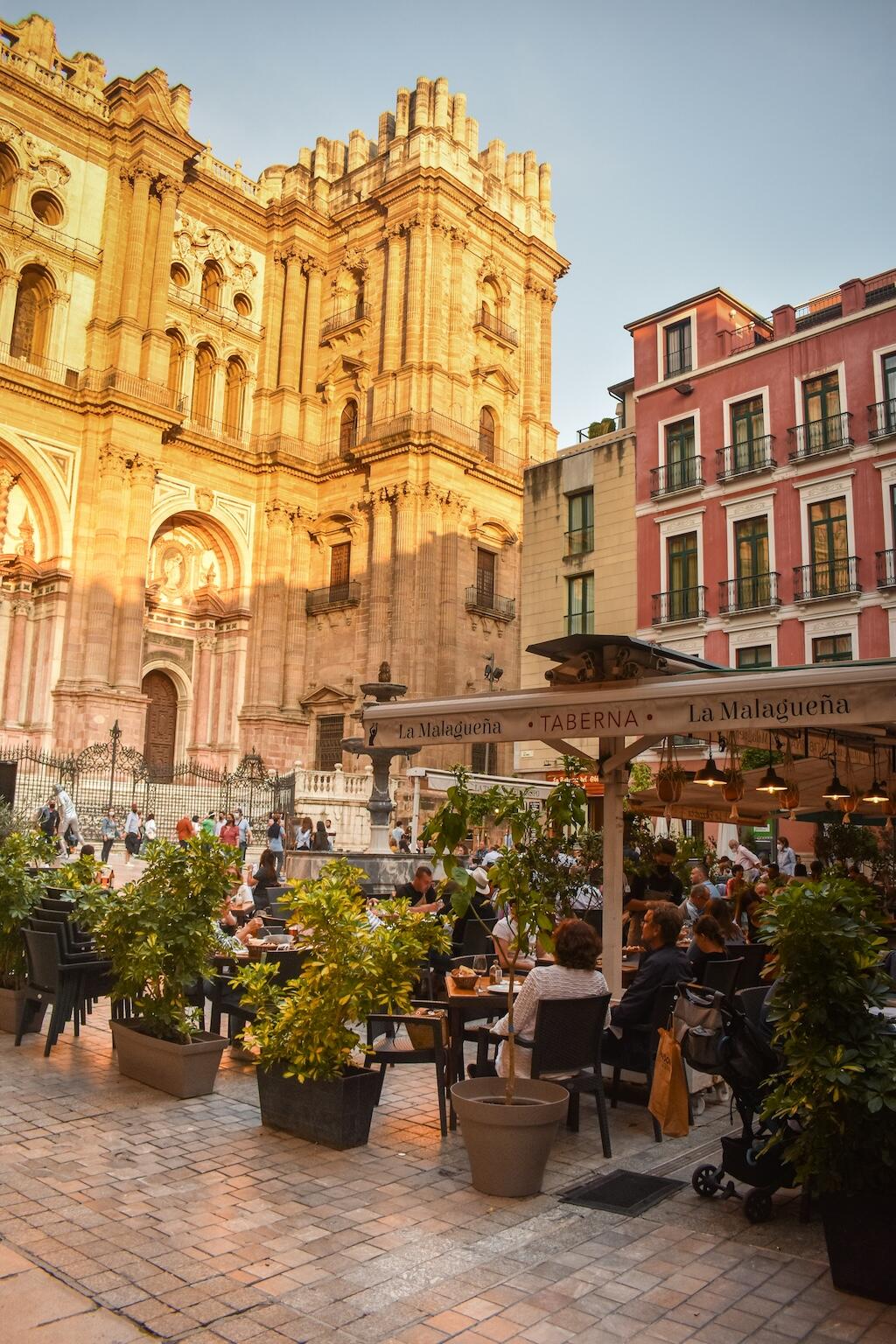
Málaga Cathedral is one of the city’s defining buildings. It is grand, warm-toned and slightly unfinished, which gives it character. Locals often refer to it by its nickname, “La Manquita”, meaning “the one-armed lady”, because one of its towers was never completed.
The area around the cathedral is especially beautiful in the evening.
Spend time at Muelle Uno
Muelle Uno is the modern harbour promenade. It is easy, open and made for strolling. There are restaurants, shops, cafés and views across the marina.
It is not the most hidden part of Málaga, but it works. Come here at sunset, especially on your first evening.
Go to the beach
Málaga’s biggest advantage is that the beach is part of the city.
La Malagueta is the most famous urban beach and the easiest to reach from the centre. It is not wild or secluded, but it is convenient and lively.
For a more local beach experience, go east towards Pedregalejo or El Palo. These areas have a stronger neighbourhood feeling, with beach restaurants, families, locals and long seafood lunches.
The beach is not only for sunbathing. It is part of daily life.
Food and drink
Málaga is one of the best cities in Spain for an easy food trip. You do not need to chase fine dining to eat well. The best meals are often simple.
Start with espetos. These are sardines grilled on skewers over open fire, usually by the beach. They are one of the signature tastes of Málaga.
Also try:
For atmosphere, eat in the old town one evening and by the beach another. They are different experiences.
The old town is better for tapas, wine bars and lively nights. Pedregalejo and El Palo are better for seafood, sea air and slower meals.
Best beaches in and around Málaga
La Malagueta
Best for convenience.
This is the beach most visitors see first. It is close to the centre, easy to reach and full of life. Come here for a quick swim, a morning walk or a relaxed afternoon without leaving the city.
Playa de la Caleta
Best for a calmer city beach.
Just east of La Malagueta, La Caleta feels a little more residential and relaxed. It is still central, but often slightly less intense.
Pedregalejo
Best for food and atmosphere.
Pedregalejo is not only a beach. It is a seaside neighbourhood. Come for lunch, stay for the afternoon and walk along the promenade.
El Palo
Best for local life.
El Palo is further east and more traditional. It is a good choice if you want to eat by the sea and feel a little removed from the city centre.
Suggested 3-day itinerary
Day 1: Old town, Alcazaba and harbour
Start in the historic centre. Walk Calle Larios, Plaza de la Constitución and the streets around the cathedral. Visit the Roman Theatre and the Alcazaba before lunch.
In the afternoon, explore the cathedral area or visit the Picasso Museum. End the day at Muelle Uno and watch the light change over the port.
Dinner in the old town.
Day 2: Beach and local food
Spend the morning at La Malagueta or La Caleta. Keep it simple. Swim, read, walk and have coffee by the sea.
In the afternoon, head east to Pedregalejo. Have a long seafood lunch, try espetos and walk along the promenade.
Return to the centre in the evening for drinks or tapas.
Day 3: Culture and a view
Use the morning for a museum or a slower walk through Soho. Then go up towards Gibralfaro for one of the best views of the city.
In the afternoon, choose between shopping, another beach visit or a final long lunch.
End with dinner somewhere that feels local rather than planned.
If you have more time
Málaga is an excellent base for day trips.
Consider:
If this is your first time in Andalusia, Granada is the most important day trip. If you want nature and drama, choose Caminito del Rey. If you want a relaxed coastal day, choose Nerja.
When to visit
Málaga is a year-round destination, but the best months for most travellers are April, May, June, September and October.
Spring is warm, bright and comfortable. Early summer gives you beach weather before the most intense crowds. September and October are excellent for warm sea, good restaurants and a more relaxed rhythm.
July and August are hot, busy and lively. They work well if you want a classic summer holiday, but book accommodation early and plan slower days.
Winter is mild compared with much of Europe. It is not a full beach season, but it is a very good time for culture, food and walking.
How long to stay
Three nights is enough for a first visit. You can see the historic centre, visit the main sights, spend time at the beach and enjoy the food scene.
Four to five nights is better. It gives the city room to breathe. You can have beach time without skipping culture, and you can add a day trip.
A full week works well if Málaga is your base for Andalusia.
Getting around
Málaga is easy to explore on foot. Most visitors can walk between the old town, Soho, the port and La Malagueta.
For Pedregalejo and El Palo, use bus, taxi or bike. The distance is manageable, but in summer heat it can feel longer than it looks.
The airport is close to the city and well connected, which makes Málaga especially convenient for a short break.
Practical tips for 2026
Book early if you plan to visit in summer. Málaga is popular, and the best hotels in the centre and near the beach fill quickly.
Choose your area carefully. The old town is best for energy and convenience. La Malagueta is best for the beach. Pedregalejo is best for a slower seaside feel.
Reserve restaurants for weekend dinners. The city has become a serious food destination, and the better places get busy.
Do the main sights early in the day. This is especially important from June to September.
Pack for walking. Málaga is relaxed, but the old town has stone streets, and the best way to experience the city is on foot.
Do not overplan. Málaga is at its best when there is space in the day.
Who Málaga is best for
Málaga is best for travellers who want a warm, easy and varied holiday. It is especially good for couples, friends, solo travellers and families with older children.
It works for people who like:
It may not be the best choice if you want a remote beach escape or a quiet small-town holiday. Málaga is a real city. That means traffic, crowds, nightlife and movement.
But for many travellers, that is exactly why it works.
Final impression
Málaga is not a destination built around one famous sight. It is built around balance.
The balance between city and sea. Between culture and comfort. Between old stone and modern design. Between long lunches and late nights. Between doing things and doing nothing.
That is what makes it such a strong travel choice for 2026.
You can come here for the beach and leave remembering the food. You can come for the museums and spend half your time by the water. You can plan every day, or you can simply walk until something feels right.
Málaga gives you options without making the trip complicated.
That is why it works.